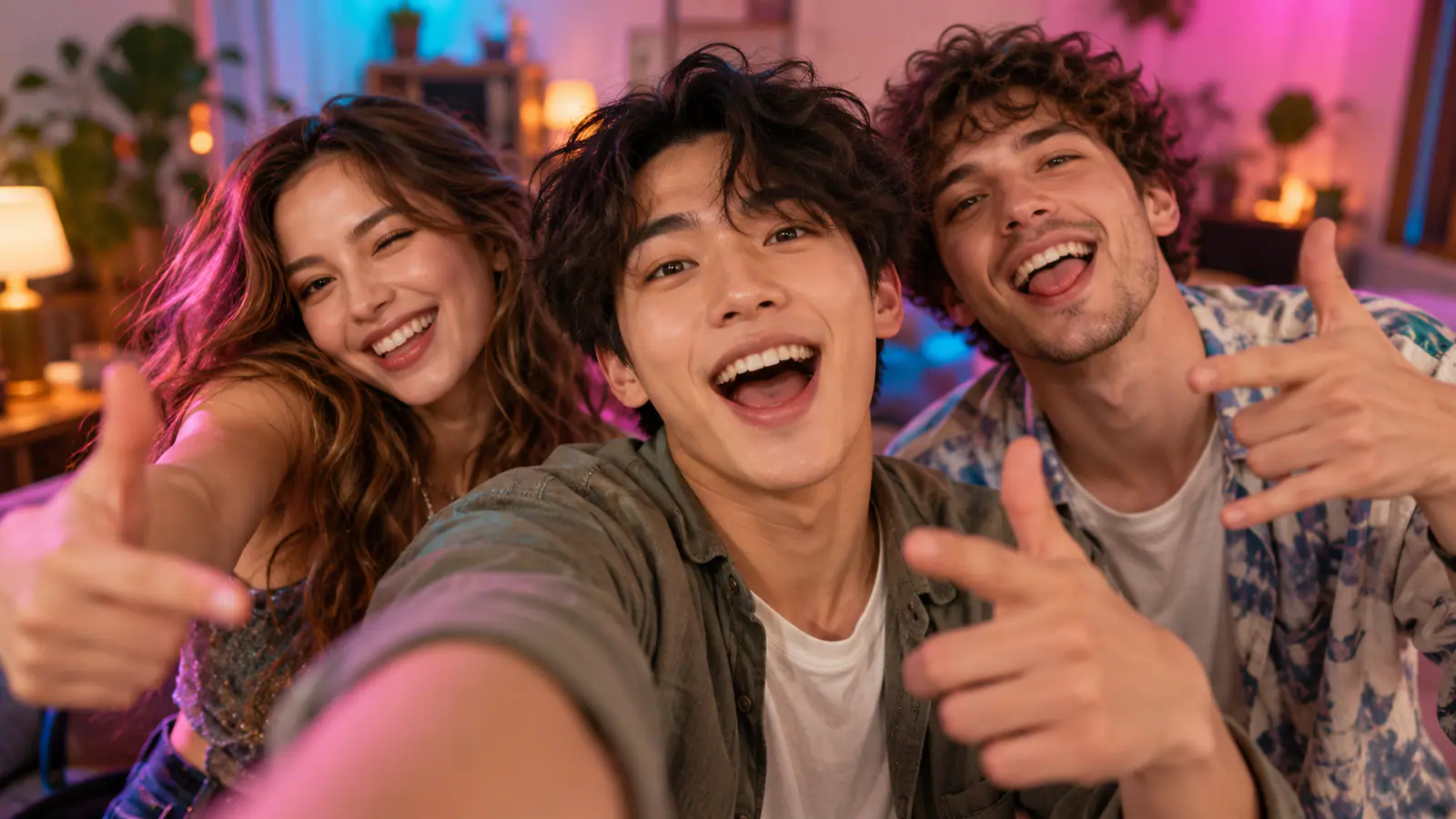

AI Dance Video or Photo Slideshow? How to Choose for a Friends Reel
Choose an AI dance video or photo slideshow for your friends reel. Compare source photos, storytelling, editing effort, and when a hybrid makes sense.
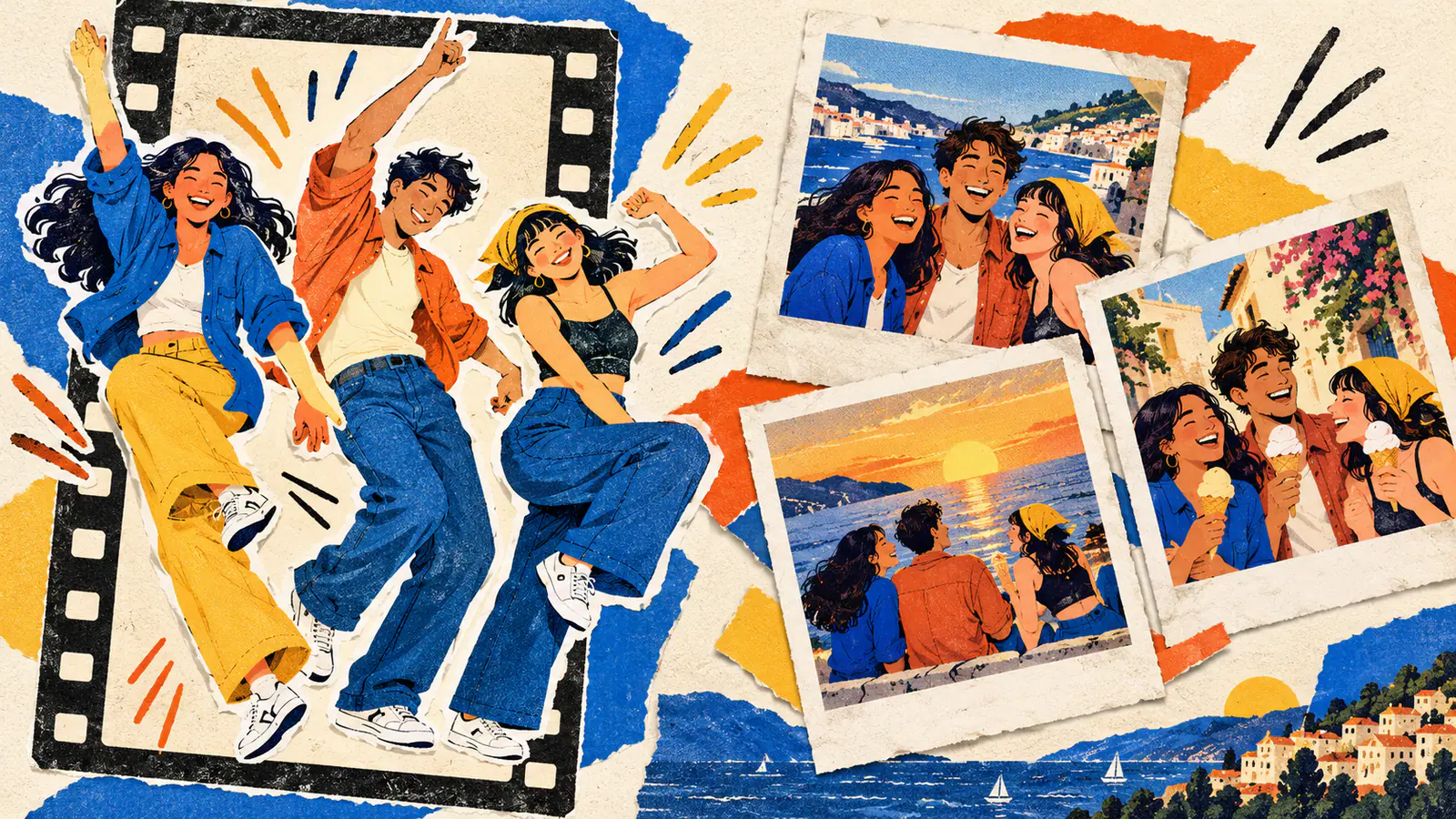
You have a birthday, a weekend away, or an inside joke that deserves more than a photo dump. Then comes the awkward choice: do you turn the pictures into a polished slideshow, or use AI to put your friends into a new dance scene?
Both can make a strong friends reel. They simply tell two different kinds of stories.
A photo slideshow says, “This happened.” It is built from the places, outfits, expressions, and messy little moments you actually captured. An AI dance video says, “Imagine us in this moment.” It creates a shared performance that never existed in the original camera roll. Neither is automatically more creative. The better choice depends on what you want your friends to feel when they watch it.
Start with the one question that settles most decisions
Ask whether the reel should preserve a memory or invent a moment.
Choose a photo slideshow when the value is in the record itself. You may have a year of friendship photos, a trip full of small details, a birthday dinner, or an event that unfolded over hours. Those images already contain the story. Your job is to select the right ones, put them in an order that makes sense, and give the audience enough time to notice the people and places.
Choose an AI dance video when the point is the new scene. Maybe the three of you never took a video together. Maybe one friend lives far away. Maybe the group chat has a running joke about who would rush the camera first and who would try to stay serious. In that case, generated movement can give the idea a form that your existing photos cannot.
This distinction is more useful than asking which format looks more impressive. A technically slick AI clip can still feel empty if the occasion calls for real memories. A simple slideshow can feel more meaningful than a generated scene when viewers want to relive an actual day.
What an AI dance video is really good at
An AI dance video gives a still photo a role in a new performance. Instead of moving through the photos one by one, the reel asks the audience to watch a character or group enter a scene, react to a camera, and move through a short beat together.
That makes it a good fit for a single idea with immediate energy. Think of a trio with clearly different personalities: the friend who takes every close-up, the friend who is funny without trying, and the person who starts the joke. A generated shared-camera scene can turn those roles into a quick visual payoff.
It is also useful when you do not have the right footage. A group may have dozens of individual selfies but no clean video of all three people together. A new AI scene can create a sense of interaction from photos, which is different from arranging those photos in succession.
There is a trade-off. The reel is a creative interpretation, not evidence of a real event. Treat it that way in the caption and when you decide where to share it. Get permission from everyone whose image is used. Review the full output before posting, and use any synthetic-content disclosure setting that applies on the platform you choose.
What a photo slideshow is really good at
A slideshow earns its emotional weight from specificity. The crooked group selfie, the bad lighting at the restaurant, the photo someone took while everyone was laughing—those details make the video feel like it belongs to the people in it.
It is the better choice when you have material worth seeing. A graduation recap, a friendship anniversary, a travel weekend, or a surprise party usually benefits from chronological movement: anticipation, the event itself, and the little aftermath. You can use quick cuts for energy, longer holds for a photo with a real emotional beat, and a final image that makes the ending land.
The work is editorial rather than generative. You need to remove near-duplicates, decide which photo establishes the setting, balance close-ups with group shots, and avoid holding one image so briefly that no one can read it. The result may use less novelty, but it can say more about a real friendship.
A slideshow is not automatically the safe option, though. If the album is thin, repetitive, or made up mostly of screenshots and blurry selfies, transitions will not create a story by themselves. In that situation, forcing a three-minute montage from weak material is less effective than choosing one clear idea and making a short AI scene around it.
Choose the format by the material you already have
The easiest way to make the decision is to open the album before opening a creation tool.
If you can quickly find eight to fifteen photos that show different moments, expressions, and settings, you probably have the beginnings of a slideshow. Look for an opener that establishes where you are, a few images with real interactions, and one image that can close the reel. You do not need perfect photography. You need enough variety for the sequence to feel like a memory rather than an autoplay album.
If the best material is three clear portraits and a strong group dynamic, an AI dance video may have more to work with. The most useful photos are not always the most polished ones. They are the ones where every person is recognizable at a glance: a full visible face, even light, and familiar hair, clothing, or expression.
This is where a specialized workflow can save time. For a preset three-person shared-camera scene, Gangnam Style AI Trio lets you choose one to three portraits or group photos, check the previews and crop, then generate through a predefined process rather than writing a movement prompt from scratch. It is most relevant when you want the group dynamic to be the reel’s main event: a shared opening, individual turns, and a return to the trio.
That does not make it the default for every friends reel. It gives you a specific route when your idea is “put us in a new scene together,” not “show what we did last weekend.”
Think about the viewing experience, not just the production method
An AI dance reel asks for attention in the first second. Its hook is the surprise of seeing familiar people move in an unexpected setting. Keep it short and let the premise do the work. A long generated sequence can dilute the joke if it repeats the same visual information.
A slideshow earns attention over time. Its first image should tell viewers why they should stay, but the payoff can build gradually: the restaurant at the start, the increasingly chaotic group shots, the quiet photo at the end. It is more forgiving of a slower pace because the audience is discovering real details.
This difference also changes how you write the caption. For an AI dance clip, frame the invented moment: “If our group chat had a stage entrance.” For a slideshow, frame the real memory: “One weekend, too many photos, no regrets.” A caption works best when it tells people what kind of reel they are about to watch.
The hidden cost of each choice
The time cost of a slideshow is sorting. You will spend more time deciding what to leave out than what to include. The risk is not that the technology fails; it is that the reel becomes a long sequence of photos that mean more to you than to anyone else. The fix is ruthless selection. Keep the photos that add a new emotion, setting, or relationship detail. Remove the rest.
The time cost of an AI dance video is preparation and review. You need to pick recognizable source photos, decide who belongs in each role, and inspect the result for moments that do not look right. The risk is not that the idea lacks energy; it is that the generated motion distracts from the people. The fix is to start with stronger photos and use a scene where the camera’s attention moves clearly from person to person.
Neither format needs to be treated as a high-stakes production. Make one short version first. Watch it on a phone, not only in an editing window. If you understand the premise without a long caption and can immediately tell who the reel is for, you are close.
When a hybrid makes sense—and when it does not
You can combine formats, but only if each section has a clear job. An AI dance clip can work as a playful opening for a genuine slideshow: the invented entrance first, the real photos after. Or a slideshow can provide context before a short generated finale.
Do not combine them just because both are available. A thirty-second reel that spends half its time explaining itself is usually weaker than a focused ten-second concept. If the real photos are the heart of the post, let them lead. If the generated group scene is the joke, let it stand alone.
A quick decision before you make anything
Choose an AI dance video if the reel needs a new shared performance, you have a small set of clear friend photos, and the personality contrast among the group is the entertainment. You are making an imagined moment on purpose.
Choose a photo slideshow if the reel needs to hold onto an actual time, place, or run of memories, and you have enough varied images to tell that story. You are editing a record of what happened.
When the answer is still unclear, make the format that you would regret not having later. If losing the actual photos would feel like losing the weekend, build the slideshow. If the joy is seeing your friends appear in a scene they never got to film, make the AI dance video.
The best friends reel is not the one with the newest effect. It is the one whose format matches the memory—or the imagined moment—you want the group to recognize.